The Story
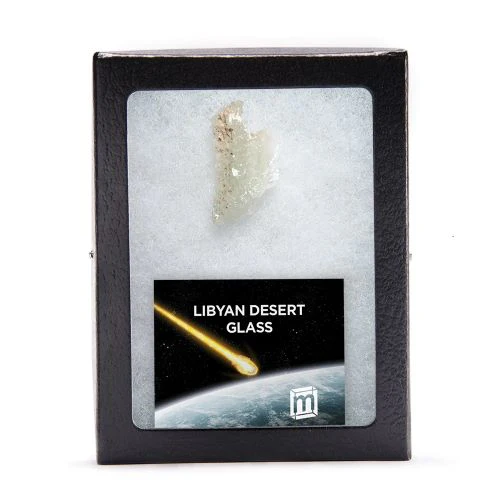
Formed from an asteroid or comet airburst explosion hitting silica-rich sands, these specimens of Libyan Desert Glass date back roughly 28,500,000 years.
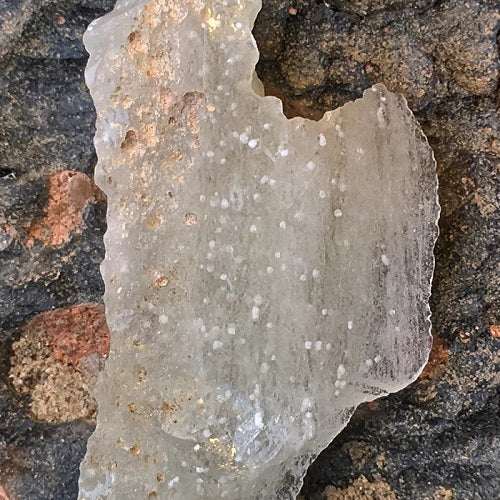
Each glass sample is derived from the southeastern spur of Africa’s Great Sand Sea and is yellow green in color. Due to the sudden and intense heat, the sand fused together to create this type of glass.
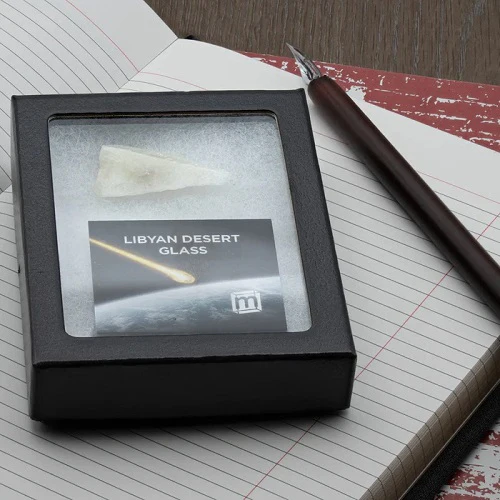
Each sample varies widely in size and shape, although most are between .75” and 1.5” in length. Each glass is enclosed in a glass topped Riker box that measures 4.5” x 3.5” and comes with a small information card to serve as a certificate of authenticity. Samples have been tumbled slightly to remove sharp edges, but a few sharp edges may still be possible.
Details & Craftsmanship
Every detail has been carefully considered to bring you the perfect product.
Details & Craftsmanship
Every detail has been carefully considered to bring you the perfect product.
Description
Formed from an asteroid or comet airburst explosion hitting silica-rich sands, these specimens of Libyan Desert Glass date back roughly 28,500,000 years.
Each glass sample is derived from the southeastern spur of Africa’s Great Sand Sea and is yellow green in color. Due to the sudden and intense heat, the sand fused together to create this type of glass.
Each sample varies widely in size and shape, although most are between .75” and 1.5” in length. Each glass is enclosed in a glass topped Riker box that measures 4.5” x 3.5” and comes with a small information card to serve as a certificate of authenticity. Samples have been tumbled slightly to remove sharp edges, but a few sharp edges may still be possible.